Founder · Nicole Cain · Apr 4, 2026
The Efficiency Trap: Why Making Things Easier Made Everything Harder
I Built an App in One Hour. Here’s Why That’s a Problem.
I was prepping dinner.
Ingredients on the counter. Macros in mind. A simple thought: What if I could input my DNA profile, macros and goals into an app and get meal options that actually worked for my profile?
Not a startup idea. Not a pitch. Just a question as many exist in todays world. But not how I was envisioning.
So I pulled out my phone and started messaging my agent, we vibe coded in parallel with the timer on the stove.
Natural language prompts, AI assistants working from text to code direction, no raw code and a concept responded to my initial message in WhatsApp. Under one hour, I had a functional macro calculator that optimized flexible meals options against my nutrigenomics profile, with an Instacart integration if I wanted these ingredients to show up to my door.
The design was slop (after all it was a one prompt wonder). The function was competitive. I have used these macro apps for years. I ate dinner. Then I sat with the quiet dread of what I’d just done.
If I can build this while chopping vegetables, what happens to the market when everyone can?
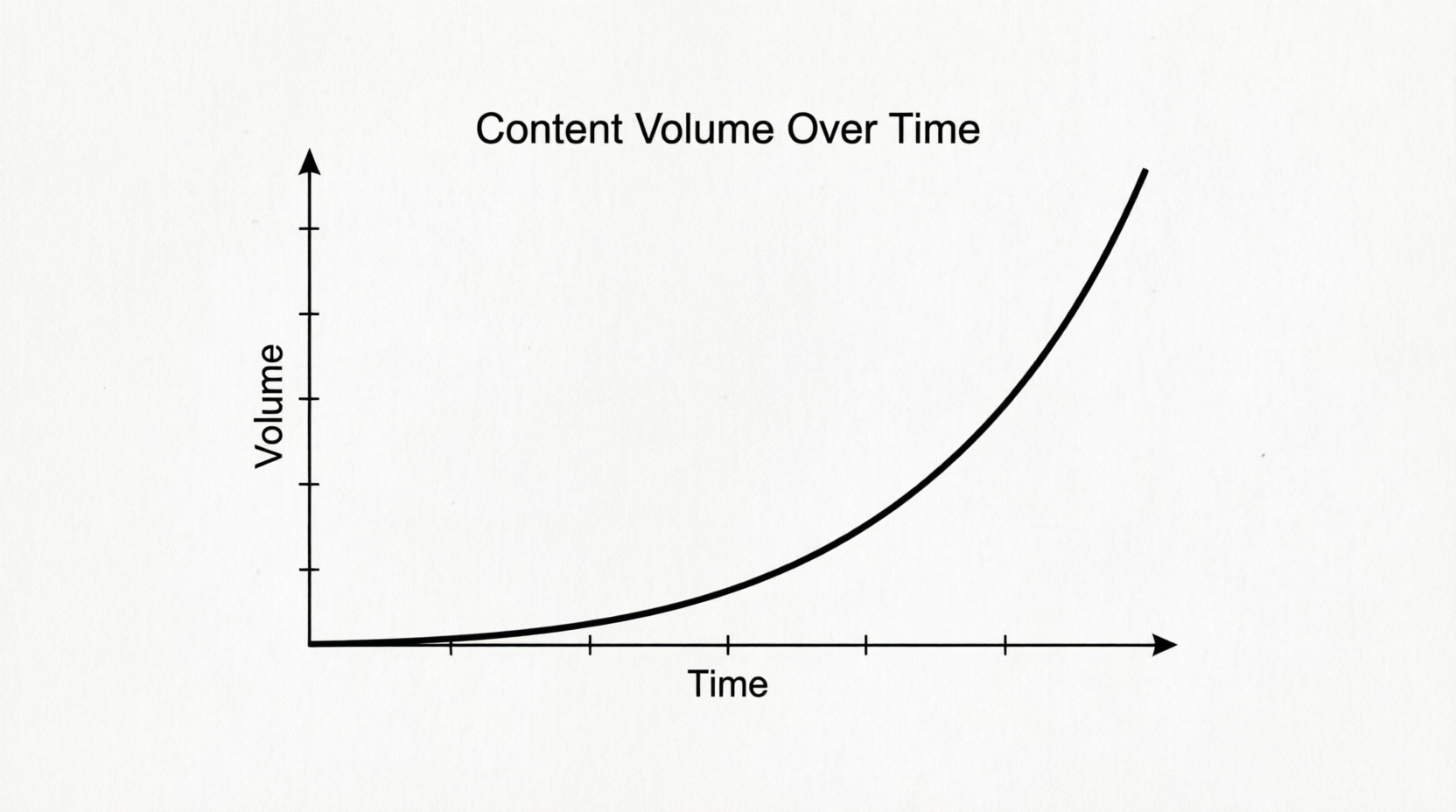
We are living through a crowding and surge in creation. The barrier to entry hasn’t lowered, it has simply dissolved. A 19th-century economic theory explains why this efficiency doesn’t free us, it exhausts us.
Jevons Paradox
In 1865, William Stanley Jevons noticed something counterintuitive about coal.
Steam engines became more efficient. Logic said coal consumption would drop. It rose.
Because efficiency made steam power cheaper, it became profitable to use it everywhere. Total consumption skyrocketed.
As technology increases the efficiency with which a resource is used, total consumption increases rather than decreases.
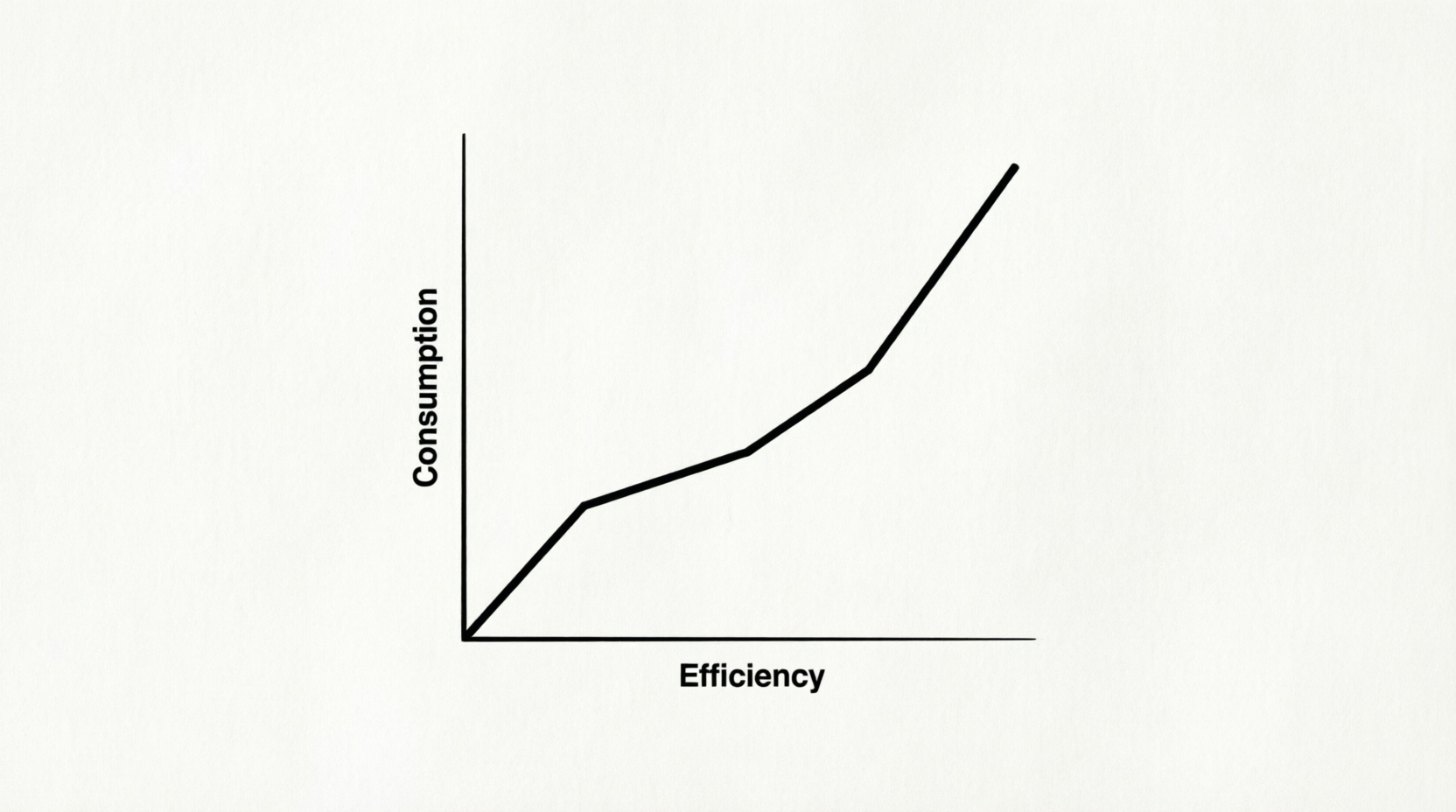
Apply this to creation:
Resource: Human attention. Market demand.
Efficiency: AI. No-code. Vibe coding.
Consumption: Apps. Content. Services.
We don’t rest when tools save us time. We produce more.
The gain didn’t create scarcity. It created a glut.
The Red Queen Effect
Lewis Carroll’s Red Queen said it plainly: “It takes all the running you can do, to keep in the same place.”
In platform markets, this describes a brutal reality: the increased pressure to adapt faster just to survive, driven by the evolutionary pace of rivals.
When one player accelerates—AI tools, automation, vibe coding—everyone else must match that pace to remain. The bar rises. Not incrementally. Exponentially.
This is compressed clockspeed. One competitor adopting a new approach compresses the innovation timeline for the entire industry. Staying in the same place requires more effort. Getting ahead requires impossible effort.
Research on ecosystem adaptation is clear: the survivors aren’t the strongest, largest, or cleverest. They are the most adaptive.
Speed is the only reliable advantage but it is always temporary until the next breakthrough.
This is why the Red Queen Effect burns people out. It’s not about working harder, it’s about:
Controls that stymie speed becoming liabilities (Insert token distribution)
Innovations commoditized before they land
A baseline that rises while you sleep
The Red Queen Effect doesn’t reward quality. It rewards velocity, and velocity is unsustainable without sacrifice.
Where Value Hides Now
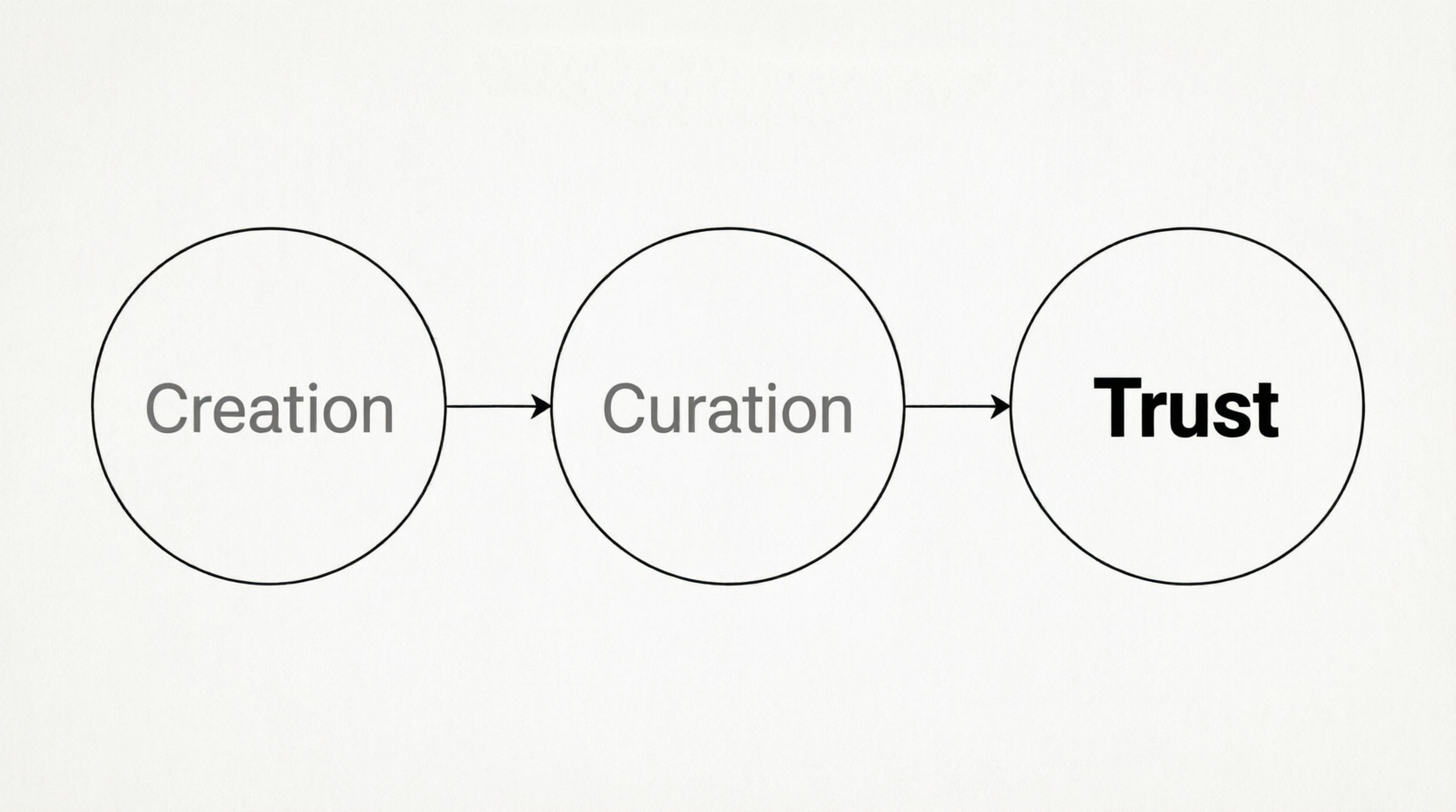
When production is commoditized, value migrates to the bottlenecks.
The bottlenecks are no longer creation. They are curation, context, and trust.
Distribution > Production
The best product matters less than the best channel. In a crowded market, the person who owns the audience holds the leverage. Proprietary distribution, email lists, communities, networks—is the only hedge against algorithmic surge.
Taste > Technique
AI generates options. It cannot choose the right one. As generation becomes cheap, curation becomes expensive. Value lives in the vision, not the brushstrokes. A strong Point of View cuts through noise better than high-fidelity production.
Trust > Transaction
When products look the same, buyers buy from people they trust. In a world of deepfakes and AI slop, provenance and personality are the ultimate scarcity.
You are not selling content. You are selling integrity.
The Way Out
Crowding and surge are not going away. The question is how you navigate them.
Stop competing on output. You will lose. Questioning if output really is driving the conversion?
Increase specificity. General products, services, brand content is saturated. Nuanced, experience-based insight is not.
Build relationships, not funnels. Efficiency optimizes funnels. Resilience optimizes relationships.
Embrace friction. Sometimes the hard way—manual outreach, handwritten notes, in-person is the only way to signal care in an automated world. Your service, product must excel in purpose. Lean into the individuality of it.
Close
Jevons Paradox teaches us that we cannot innovate our way out of crowding by making production easier. We have already made it too easy.
My dinner app works. It is not a business. It is a symptom of a market where function is free, but meaning is expensive.
The next frontier isn’t about how fast you can build. It’s about why you’re building, who you’re building for, and whether anyone trusts you enough to care.
In an economy of infinite content, the only scarce resource left is meaning.
Nicole Cain
Founder, GRID
Writing at the intersection of identity, systems, and adaptive intelligence